


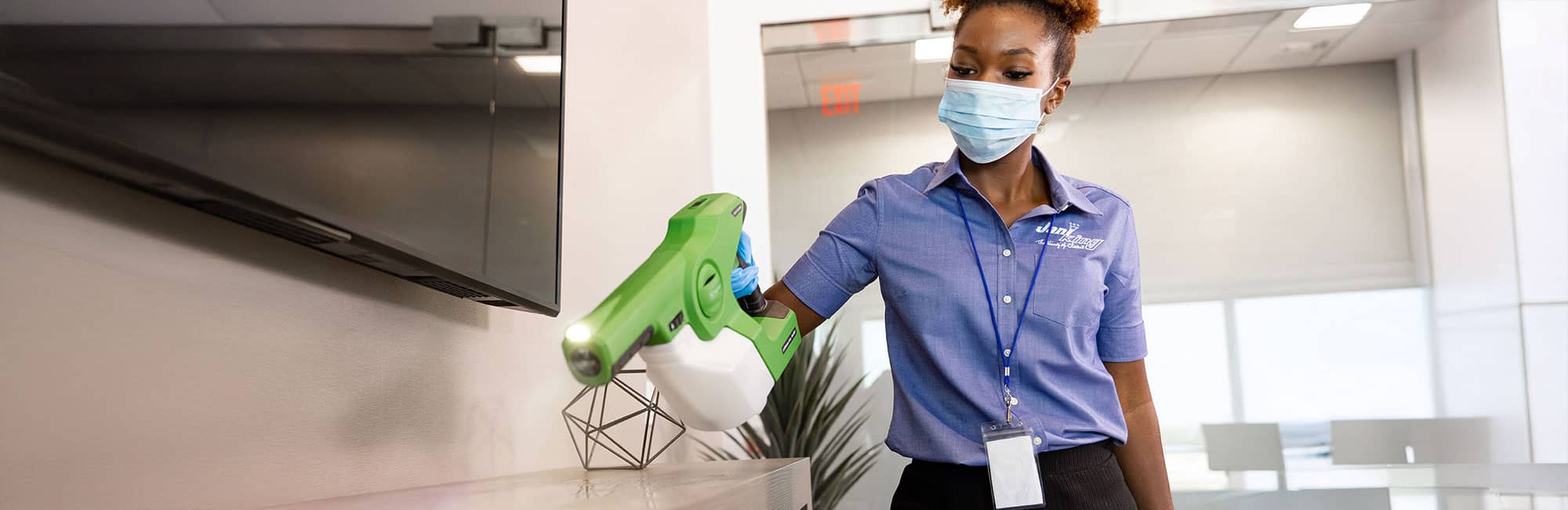
If you’ve been hearing more about electrostatic disinfection lately, you’re not alone. As businesses get more serious about reducing pathogens and keeping indoor spaces healthier, this method has become a go-to for facilities that need consistent, thorough coverage without spending hours on application. So, what is electrostatic disinfection and should your business be using it? Let’s break it down in plain terms so you can decide whether it makes sense for your operation.
What is electrostatic disinfection?
At its core, electrostatic disinfection uses applicators that give liquid germicide droplets an electrical charge as they leave the sprayer. Because most indoor surfaces carry a neutral or negative charge, those positively charged droplets are naturally drawn to them, coating fronts, backs, and sides in a way that’s tough to replicate with a standard sprayer or a wipe-down. It’s worth noting that this isn’t a substitute for routine cleaning. You still need to remove visible soil first; electrostatic disinfection is the enhanced step that comes after.
The equipment itself comes in a few different forms depending on the size of the space you’re working with:
- Handheld sprayers are compact and easy to maneuver, making them ideal for smaller rooms, frequent touchpoints, and quick spot treatments.
- Backpack sprayers give you more capacity and freedom of movement, which works well for mid- to large-sized areas like classrooms or open-plan offices.
- Cart-mounted systems are built for high-volume work in expansive spaces like arenas or convention centers, where uniform coverage over a long run time is the priority.
As for the chemistry involved, a range of EPA-registered germicides can be used as long as the label permits electrostatic application. Common options include:
- Quaternary ammonium compounds, which offer broad-spectrum efficacy and quick turnaround times.
- Hypochlorous acid solutions, known for fast kill times and low residue.
- Hydrogen peroxide-based formulas that break down into water and oxygen, making them suitable for a wide range of surfaces.
- Certain sporicidal products for higher-level needs, such as areas with elevated risk of C. difficile or other resilient organisms.
How does electrostatic disinfection work?
As the liquid passes through the charged nozzle, the droplets pick up a positive charge. Since indoor surfaces are typically neutral or negative, the droplets are attracted to them, and because like charges repel, the droplets spread out naturally, helping create an even coat. The result is that the solution wraps around curved and complex objects in a way that a standard pump sprayer simply can’t match.
That said, good results come down to proper technique. Here’s how a typical application sequence looks:
- Preparation: Always pre-clean first. Germicides perform best on surfaces free of dust and soil.
- Product selection: Choose a product suited to your environment and target organisms, and confirm the label specifically allows electrostatic application.
- Area setup: Secure loose papers, cover sensitive electronics as needed, and restrict access to the area while work is underway.
- Spraying technique: Maintain a steady distance, often 2 to 3 feet for larger surfaces and closer for detailed areas, moving methodically to avoid overspray and ensure even coverage.
- Dwell time: Let the surface stay visibly wet for the full contact time listed on the label before reopening the space. This step is non-negotiable for the product to work as intended.
Safety practices matter just as much as technique. Wear the PPE listed on the product’s Safety Data Sheet, including gloves, eye protection, and respirators when required. Keep the area well ventilated during and after application, avoid spraying directly into open electronics, food, or aquariums, and select products with residue profiles appropriate for your facility. Many hydrogen peroxide and hypochlorous options have lower odor and residue, which makes them a practical fit for occupied or sensitive environments. Store and dispose of all chemicals per label instructions, and stay aligned with OSHA, EPA, and any local requirements that apply.
Should your business be using electrostatic disinfection?
The honest answer depends on your space and your risk tolerance. Start by asking yourself two things: How complex is your facility? And how quickly do you need to turn spaces around? If electrostatic disinfection sounds like it might fit, those two factors will tell you.
Electrostatic methods shine when you need consistent, broad coverage applied efficiently. Compared to basic spray-and-wipe or trigger sprayers, they can improve coverage and cut application time significantly in large areas. They’re especially effective on high-touch, complex surfaces like chairs, rails, keyboards (with proper precautions), lockers, and fitness equipment, where manual methods often leave gaps. On the flip side, if you have low-traffic zones with light occupancy and solid daily cleaning routines already in place, this added step may not be necessary.
Settings that tend to benefit most, particularly where turnover is high or hygiene expectations are elevated, include:
- Offices and corporate campuses, where supplementing touchpoint disinfection after peak occupancy or events makes a real difference.
- Education, where classrooms, buses, gyms, and common areas need fast, consistent treatment.
- Transportation, where vehicles, waiting areas, and handrails need attention between service intervals.
- Retail and hospitality, where even coverage of customer-facing spaces is essential without prolonged closures.
- Healthcare-adjacent environments like outpatient clinics, urgent care centers, dental offices, and senior living common areas, used as an adjunct to established protocols.
How often you apply it should match your risk level, occupancy patterns, and available resources. Some common approaches include:
- Targeted applications during peak illness seasons or in response to specific outbreaks.
- Scheduled weekly or biweekly treatments in high-traffic areas.
- On-demand service following events or periods of elevated use.
Whatever schedule you land on, the sequencing matters: clean first, then apply via electrostatic sprayer, and make sure dwell time and ventilation requirements are built into your reopening plan.
Compliance and documentation are also part of the equation. Use EPA-registered products matched to your pathogen concerns, and confirm labels permit electrostatic application. Keep records of what products were applied, including lot numbers, areas serviced, and dwell times. In spaces with stricter oversight such as foodservice, childcare, and healthcare-adjacent environments, align your procedures with local health department guidance, OSHA rules, and applicable CDC and industry best practices. And whether your team is handling this in-house or through a service partner, proper training on PPE, equipment maintenance, and safe chemical handling is essential.
If fast, consistent disinfection across large or complex areas is a priority for your facility, electrostatic disinfection can be a genuinely strong addition to your overall strategy. When implemented alongside routine cleaning and targeted touchpoint disinfection, it can improve coverage, reduce downtime, and support a healthier environment for both employees and visitors. For many teams still evaluating what is electrostatic disinfection and should your business be using it? starting with a pilot in your highest-traffic zones is a practical way to see the benefits firsthand before rolling it out more broadly.
Implementing electrostatic disinfection with Jani-King
Working with Jani-King makes the implementation process straightforward. Our teams use professional-grade sprayers and EPA-registered products specifically designed for this method, and our trained technicians follow label directions, safety protocols, and best practices for pre-cleaning and dwell times from the start.
Service options are flexible, ranging from periodic preventive treatments to high-frequency schedules during peak seasons or outbreak response. We develop custom plans based on your facility type, occupancy levels, and budget, and we can integrate electrostatic disinfection into a broader program that includes routine cleaning, targeted high-touch disinfection, and day porter support. If you’re still working through whether electrostatic disinfection is the right fit for your business, Jani-King can assess your spaces, recommend the right products and schedules, and deliver a reliable, compliant solution built around your operational goals. Whether you need to answer what is electrostatic disinfection and should your business be using it? for internal stakeholders or roll out an enterprise-wide protocol, we’re here to help you select the right products, implement effective techniques, and maintain consistent, well-documented results.